Architectural & Interior Design
Buying a Home in Pune, Mumbai & Maharashtra: Documents, Parking, RERA and FSI Explained
16 Nov 2026
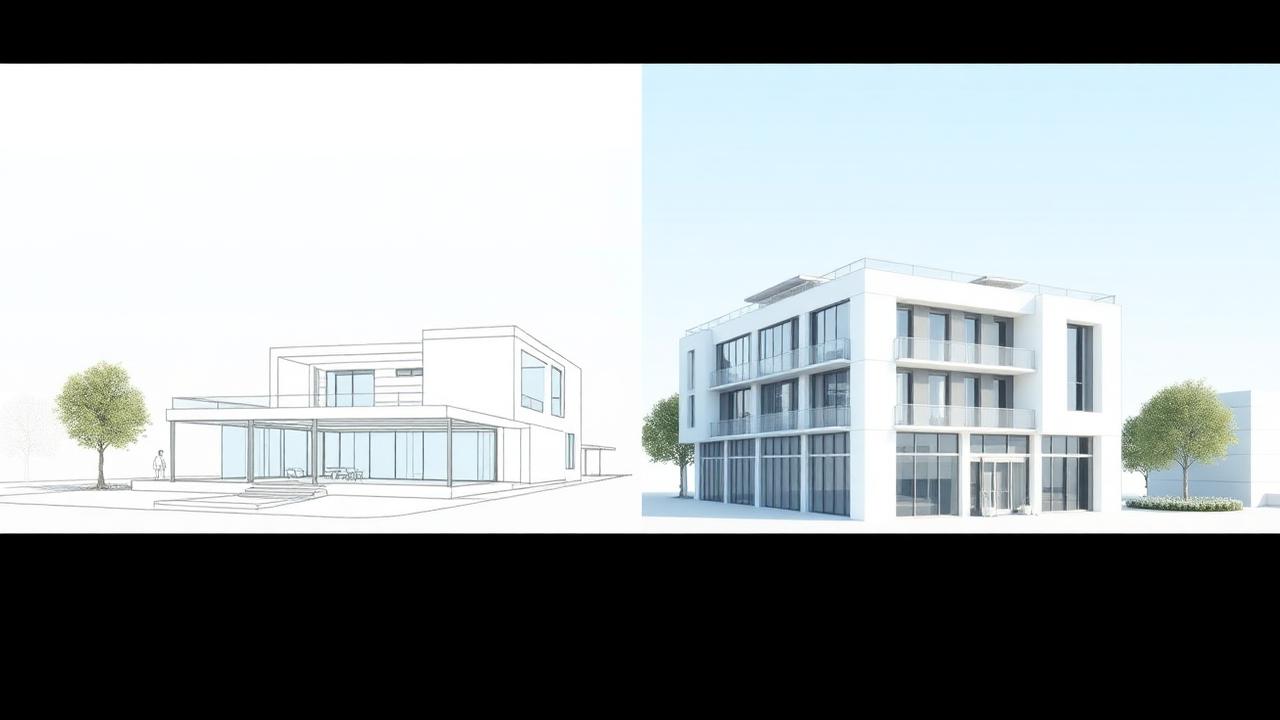
A practical Maharashtra homebuyer guide to property documents, MahaRERA checks, parking, FSI, possession and design planning, with separate advice for Pune and Mumbai.
Quick answer: what should you check before buying a home in Maharashtra?
Before paying a substantial booking amount, identify the exact property and project phase, check MahaRERA registration where applicable, obtain the title and approval documents, review the draft agreement independently, and confirm the carpet area, parking terms, possession conditions and total costs in writing. For a completed home, verify the occupancy certificate applicable to your building or phase. A lender’s approval, a sample flat or a brochure is not a substitute for your own legal and technical review.
This is a foundational real-estate guide for first-time homebuyers in Pune, Mumbai and Maharashtra. It separates legal ownership questions from building-plan, parking and interior-design questions. It is educational information, not a title certificate, legal opinion, investment recommendation or approval of any particular project. Rules and documents depend on the site, transaction and competent authority; ask an independent property lawyer and qualified local technical professional to review your actual file.
1. Start with the property, not the sales pitch
First decide whether you are buying an under-construction apartment, a ready-to-move flat, a resale home or a plot for a bungalow. These are different transactions. A resale flat needs a review of earlier transfers and society records where applicable. An under-construction flat needs a close look at the registered phase, development permissions, agreement and completion schedule. A plot also requires land-use, access and buildability checks; a plot advertised as residential does not automatically make every proposed house permissible.
Write down the unit number, building or wing, project phase, address and plot identifiers from the documents. Compare these details across the booking form, draft agreement, sanctioned plan and project information. If the names or boundaries differ, resolve the discrepancy before treating the file as complete.
For Maharashtra projects, MahaRERA advises buyers to review the title, encumbrances, litigation, development permissions, disclosures and project finance during the buying stage. Use the official guidance as a starting point rather than relying only on the seller’s checklist. 1
2. Documents required for buying a flat: a practical checklist
There is no single document list that proves every property is safe. Ask your lawyer which records apply, who issued them, whether they are current and whether originals or certified copies are needed. The purpose is to understand ownership, permissions, obligations and liabilities—not simply to collect a thick folder.
- Ownership and title: current and earlier registered transfer documents, title report and supporting land records appropriate to the property. Ask who owns the land and who is authorised to sell the unit.
- Mortgages and disputes: information about loans, charges, litigation and the release process if the property or project is mortgaged. A verbal assurance that a loan will be cleared is not enough.
- Building approvals: sanctioned building and layout plans, development permissions and the commencement permission relevant to the phase and permitted work.
- MahaRERA information where applicable: registration number, exact registered phase, declared completion schedule, uploaded documents and project updates. Do not assume one phase’s registration covers every adjoining building.
- Transaction documents: booking or allotment terms, draft agreement for sale, specifications, payment schedule, cancellation terms and the eventual registered transaction documents appropriate to the purchase.
- Ready or resale property: applicable occupancy and completion records, society documents where applicable, existing ownership documents and checks for maintenance and property-tax liabilities.
- Parking and amenities: written parking details, the relevant plan or identification, and the amenities promised in the agreement. Keep the sales material as supporting evidence, but obtain contractual clarity.
MahaRERA’s buyer-rights guidance describes access to sanctioned plans, specifications and the stage-wise completion schedule, as well as necessary plans and documents after possession. These rights do not remove the need to review your particular transaction. 4
3. How to check a project on MahaRERA
Use the registration number supplied by the promoter and compare the project name, phase, address and promoter identity with your paperwork. Read the registration information and available updates rather than checking only that a number exists. Ask for explanations of extensions, differences in the declared completion schedule, missing approvals or changes that affect the unit you intend to purchase.
Registration is an important verification step; it is not a promise that a purchase has no risk, that a flat suits your needs, or that every advertising claim has been independently confirmed. If someone says registration is not required, have a property lawyer check the applicable exemption instead of relying on a generic rule quoted in a sales conversation.
Keep dated copies of the documents you reviewed and the written answers you received. An organised record is useful when the agreement is revised, an amenity changes or a possession dispute arises.
4. Why was parking not provided with my flat?
A parking problem can arise because the buyer assumed a space was included, the written allocation is unclear, the handed-over bay differs from the identified space, or the actual arrangement does not suit the vehicle. These are possibilities, not a diagnosis of a particular dispute. Begin with the agreement, allotment information, approved parking arrangement and written correspondence.
Ask the promoter or seller to identify the parking type and location in writing. Clarify whether it is open, covered, a garage or mechanical parking; the terminology and legal treatment matter. Do not assume a promise of “car parking” means the same thing as ownership of a separately saleable space. MahaRERA lists Order 54/2024 concerning mandatory parking information in the sale deed and allotment letter; check the operative document and obtain advice on how it applies to your purchase. 1
For usability, inspect the actual bay and route rather than just its painted number. Check entry and exit, columns, turning space, ramp access and safe pedestrian movement. For mechanical parking, ask about the system’s vehicle limits, operation, maintenance responsibilities and access during an outage. A bay can exist on paper yet still need a careful suitability check for your vehicle.
If parking is missing or different from what was promised, document the facts with measurements, photographs and the written allocation. Ask for a written response through the promoter’s grievance process, and take the file to a property lawyer for advice on the appropriate remedy or forum. This article cannot decide whether you are entitled to a specific bay or compensation.
5. FSI explained: does higher FSI mean a better home?
Floor Space Index, or FSI, expresses the relationship between the floor area counted under the applicable planning rules and the plot area. As a simplified teaching example, a 1,000-square-metre plot with an FSI of 1.0 would correspond to 1,000 square metres of counted floor area. This is not a development entitlement or a full building design: the authority’s rules determine what counts, what may be excluded and what other restrictions apply.
Permissible development can depend on zoning, road width, reservations, setbacks, height restrictions, infrastructure and the planning regime applicable to the site. Do not use one internet FSI value for every Pune, Mumbai, Thane, Navi Mumbai or Maharashtra plot. Obtain the sanctioned proposal and have a qualified professional explain the site-specific calculation.
For a flat buyer, higher FSI is not automatically a sign of better daylight, ventilation, parking or lower maintenance. Ask practical questions about how the approved density translates into lift demand, common spaces, circulation and services. For a plot buyer, understand the permitted building envelope before paying for a detailed bungalow design.
6. Carpet area, usable layout and the sample flat
Compare the area recorded in your agreement with the identified unit and plan. Ask the seller to explain the area terminology and measurement basis in writing. Do not compare two offers only by a headline price per square foot if the area definitions differ.
A display apartment may include furniture, finishes, lighting or alterations that are not part of the purchased specification. Walk through the actual plan with realistic furniture sizes. Can bedroom doors open beside the bed? Is there space for wardrobes without blocking a window? Does the kitchen retain a workable route around appliances? Can bathrooms and service shafts be accessed for maintenance?
These checks help you budget for a livable home, but they do not certify ownership or permissions. For a layout or renovation discussion, explore NICVDC interior design services and keep legal verification with your property lawyer.
7. Buying a home in Pune: local questions to ask
For Pune, Pimpri-Chinchwad and the wider metropolitan area, first identify the competent planning authority for the specific site. Do not infer jurisdiction solely from a postal address or a popular neighbourhood name. Confirm that the permission in the file relates to the building and phase you are buying.
In locations such as Wakad, Hinjawadi, Baner, Kharadi, Wagholi and Hadapsar, compare your actual commuting route, access road, water arrangements, nearby construction and everyday facilities through a site visit. These are buyer-check locations, not claims that every project in an area has the same condition or investment potential.
For a Pune bungalow or plot, review access, land use, plot boundaries and the permitted proposal before commissioning a design. A residential architectural design discussion with NICVDC can help define layouts and drawings, while local approvals and legal due diligence need the responsible professionals and authority.
8. Buying a home in Mumbai: space, building and parking checks
For Mumbai, Thane and Navi Mumbai, identify the specific jurisdiction and approval framework before using a checklist meant for another municipality. A resale apartment, redevelopment purchase and new-project purchase can raise different ownership, society and contractual questions.
In a compact apartment, inspect storage potential, ventilation, daylight, plumbing routes and the practical dimensions of rooms. If you intend to renovate, ask which walls and service elements can be changed, what society permissions are required and whether the proposal needs further technical or authority review. Do not remove structural elements merely to reproduce a sample-flat layout.
For parking, review the actual allocation and access—not simply the availability of a basement or a mechanical system somewhere in the building. For redevelopment, have a lawyer explain the relevant agreements, possession conditions and project-specific protections rather than assuming the terms are standard.
9. Buying elsewhere in Maharashtra: match the checklist to the property
Buyers in Nashik, Chhatrapati Sambhajinagar (Aurangabad), Kolhapur, Satara, Sangli and other Maharashtra cities should follow the same core sequence: identify the property, establish the competent authority, review ownership and permissions, understand the agreement and inspect before possession. What changes is the property file and local planning context, not the need for evidence.
A farmhouse or bungalow plot needs particular care about land use and permitted construction. An agricultural record or a scenic location does not by itself prove that the advertised residential use is lawful. Obtain advice appropriate to the land and proposed use before committing to a house design or construction budget.
NICVDC is based in Pune and accepts design inquiries from Mumbai and other Maharashtra cities. These city references describe service areas; they do not imply a NICVDC branch office in every location.
10. OC, completion records and possession: what is the difference?
Do not treat the word “completion” in an advertisement as proof that the correct occupancy documentation is in place. MahaRERA explains that an occupancy certificate is issued by the civic authority and signifies completion in compliance with the approved plan and building laws. Its possession guidance also asks buyers to check the architect’s Form 4 and the project’s amenities and internal work. 2
Ask whether the certificate covers your building, wing or relevant phase and whether there are conditions that need clarification. Verify the document with the issuing authority or through your adviser where needed. A certificate covering a different building is not a substitute for the document applicable to your home.
Before handover, inspect doors, windows, fittings, visible cracks, drainage, leakages and agreed amenities. Record snags with dates and photographs, obtain written acknowledgement and agree how unresolved items will be addressed. A snag inspection is not a structural safety certificate and cannot reveal every concealed defect.
11. Budget beyond the quoted flat price
Ask for a written breakdown of the purchase and recurring costs. Depending on the transaction, these may include statutory charges, applicable taxes, registration-related costs, society or maintenance contributions, loan expenses, interiors and repairs. Exact rates, applicability and concessions must be checked against current official guidance and your transaction; this guide does not quote universal tax percentages.
For interiors, start with the measured layout and scope. Separate essential work from optional upgrades, define materials and agree what quotations include. A bill of quantities can make contractor comparisons more meaningful when each offer is based on the same items and exclusions.
For a new house, avoid treating a general per-square-foot construction figure as a complete budget. Structure, finishes, site conditions, services, approvals and responsibilities need a project-specific scope. NICVDC can discuss design and estimation requirements, but legal, financing and investment advice are outside the purpose of this article.
12. How BIM, Revit and 3D views help—and what they cannot prove
A scoped BIM or Revit model can help a project team coordinate the architectural, structural and services information supplied for the work. A 3D view or walkthrough can help a homeowner understand a proposed layout, furniture and finishes. Outputs depend on the inputs, agreed detail and the review responsibilities.
Neither a attractive render nor a model proves that the land title is clear, the building is approved or the finished site matches the proposal. Existing-building modeling needs suitable measured or verified source information. Legal verification, technical inspection and visualization serve different purposes and should not be confused.
Explore NICVDC BIM modeling, 3D rendering and the Pune–Mumbai–Maharashtra home design guide when you need to define the design side of the project.
Frequently asked questions
Which documents should I check before buying a flat in Pune?
Start with title and transfer records, applicable sanctioned plans and development permissions, MahaRERA information where applicable, the draft agreement and payment terms, parking details and, for a completed flat, the applicable occupancy records. A property lawyer should tailor the final checklist to the property and transaction.
Is a MahaRERA registration number enough to buy safely?
No. Check the exact registered phase, uploaded documents and project updates, and independently review title, approvals, the agreement and the actual unit. Registration does not replace legal and technical due diligence.
What should I do if I did not receive the promised parking?
Compare the agreement and written allotment with the actual parking arrangement, document the mismatch and request a written response. Have a property lawyer advise on the correct remedy for your facts; do not assume a particular outcome from a general article.
Is the same FSI allowed across Pune and Mumbai?
No single value should be assumed across all sites. The competent authority, planning rules and plot conditions determine the applicable development controls. Ask for a site-specific explanation of the sanctioned proposal.
Should I plan interiors before taking possession?
You can discuss the scope using suitable drawings, but confirm actual measurements, agreed handover specifications and required permissions before finalising fabrication or invasive work. Budget for changes identified during inspection.
Can NICVDC verify the legal title of my property?
This guide does not offer a title certificate or legal opinion. Use an independent property lawyer for ownership and transaction checks. NICVDC inquiries can cover architecture, interiors, visualization, BIM and project-specific design or estimation scope.
Your next step: prepare a useful project brief
For a design inquiry, share your city, property type, approximate area, available drawings, intended work and timeline. Do not send sensitive identity or financial documents through a general inquiry form. Use Build Your Home or Contact NICVDC to discuss the scope; a mobile number is required so the team can follow up.
NICVDC’s published company and founder information is available on the About page and Shubham Bawankar’s profile. Those references identify the studio; they are not a guarantee about any property mentioned in an inquiry.
Official references and review boundary
The buying-stage, possession-stage and allottee-rights guidance linked above comes from MahaRERA. The parking order is listed in the authority’s orders directory. Always check the current operative documents and ask your adviser how they apply to your case. This article intentionally avoids unsupported return promises, fixed property prices, universal FSI values and claims that a project is automatically safe because it is registered.
Reviewed for this guide on 16 November 2026. Official sources support the regulatory checks; the local layout, inspection and budgeting sections are practical questions to discuss with your own advisers, not findings about a named developer or building.